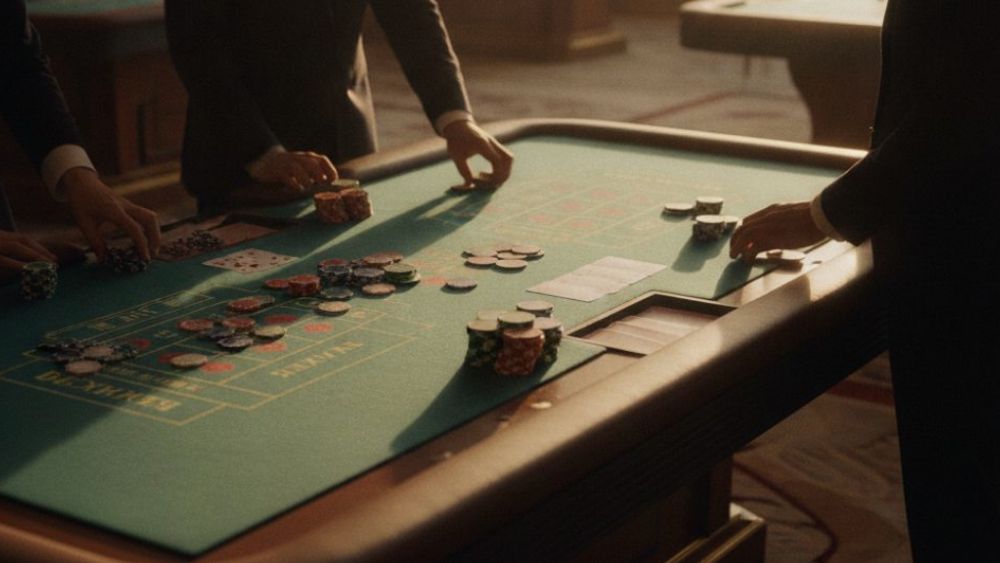
Why Pusoy Dos Rules Spark So Many Arguments
Ask five Filipino players to deal a hand of pusoy dos and you will get five slightly different games. One person insists a straight beats a flush. Another swears you cannot play a five-card hand unless it is your turn to "open." A third will tell you that a 2 can never be beaten, which is exactly the kind of confident nonsense that starts a shouting match at a family reunion in Cavite.
Pusoy dos, also spelled pusoy dos or called Chinese poker in some circles, is a shedding game for four players using a standard 52-card deck. The goal is simple: be the first to empty your hand. Everything else, the ranking of combinations, the treatment of the 2, whether you must announce "last card," is where the myths creep in.
This guide separates what the standard rules actually say from the folk variations that spread through barkada games and get repeated online as if they were gospel. If you play pusoy dos for real money on Philippine online casinos in 2026, knowing the difference matters, because the software does not care what your tito taught you.
Myth 1: 'A 2 Is the Highest Card, So a Pair of 2s Beats Everything'
This is the single most repeated pusoy dos myth in the Philippines, and it is only half true. The 2 (or deuce) is indeed the highest single card in the standard ranking, sitting above the ace. So a lone 2 beats a lone ace. That part is correct.
What gets twisted is what happens inside combinations. In the standard ranking, pairs follow the same order as single cards, so a pair of 2s is the highest pair and beats a pair of aces. That is consistent.
But the myth goes further and claims a pair of 2s beats a five-card hand like a straight or a flush. That is false. Five-card combinations outrank all four-card and lower combinations in the standard hierarchy. A straight flush, four of a kind, full house, flush, straight, and three of a kind all sit above any pair, including aces or 2s.
Rule of thumb: the number of cards in a combination decides its tier first, then the rank inside that tier. A pair never beats a five-card hand, no matter how pretty the pair looks.
Myth 2: 'Straights and Flushes Are Basically the Same Value'
They are not, and the confusion usually comes from poker, where both are five-card hands but flush beats straight. In standard pusoy dos, the ranking of five-card hands runs, from highest to lowest: straight flush, four of a kind, full house, flush, straight, three of a kind.
Notice that flush still beats straight, which matches poker. The myth here is a different one: some players claim that in pusoy dos, a straight is worth more because it is "harder to get." Statistically that is wrong. There are more possible straights than flushes in a 52-card deck, so the flush rightly outranks the straight.
Another variation floating around says a straight must be exactly five cards and cannot wrap around, meaning Q-K-A-2-3 does not count. That part is actually correct under standard rules. Aces are high only, so A-2-3-4-5 is not a valid straight in most official rulesets. If your table allows it, that is a house rule, not the standard.
Myth 3: 'You Must Open With the 3 of Clubs'
Many Filipino households play that the holder of the 3 of clubs must lead the first hand, and that the first play must include the 3 of clubs. This is a widespread convention, but it is not universal, and it is not part of every standard ruleset.
The 3-of-clubs opening rule exists to remove the luck of who starts and to prevent collusion, similar to how some rummy variants require a specific card to open. It is a legitimate house rule and most casual pusoy dos games use it. But if you sit at an online table in 2026 and the software lets you lead with anything, do not assume the dealer is broken. The platform is simply using a ruleset without the forced opening card.
What is consistent across almost all versions: the player to the dealer's left leads the first trick, and play proceeds clockwise.
Myth 4: 'You Can Pass and Then Come Back In Later'
This one causes real money disputes. In standard pusoy dos, when you pass, you are out of that trick. You cannot jump back in after seeing what others play. The trick continues only among players who have not passed, and once a player leads a new combination, passing resets for the next trick.
Some home games allow "re-entry" passing, where you can pass and then play later in the same trick if the combination changes. That is a variation, and it is a bad one to bring to a casino table. Online pusoy dos in the Philippines almost always enforces the strict version: pass means pass for that trick.
If you are new to a table, ask before the first deal. It is a two-second question that saves a ten-minute argument.
Myth 5: 'Five-Card Hands Can Only Be Played When You Lead'
Another persistent myth: you can only play a straight, flush, full house, or four of a kind when you are the one opening the trick. In reality, you can play a five-card combination to beat another five-card combination of the same type, or to beat a lower tier, depending on the ruleset.
The cleaner way to state the real rule: a combination can only be beaten by a combination of the same number of cards and the same type, or by a higher tier if the ruleset allows tier jumping. Most standard rules do allow a higher tier to beat a lower tier within the same card count, which is why a full house can beat a flush only if your table treats them as the same tier, which standard rules do not. Stick to the published ranking and you will be fine.
What you cannot do is play a five-card hand in response to a pair. The card counts must match.
Myth 6: 'Pusoy Dos Is Pure Luck'
This is the myth that costs players the most money. Pusoy dos has a significant skill component, especially in the passing and leading decisions. Knowing when to break up a pair to keep a straight, when to dump a high single early, and when to hold a 2 for the endgame separates winning players from losing ones.
Position matters. The player who leads a trick controls its shape. If you are sitting after a player who always leads low singles, you can plan your hand around that. If you are before a tight player, you can force them to break combinations.
Card counting is limited because there are only 52 cards and four players, but tracking which 2s and aces have been played is entirely doable and gives a real edge in the endgame. Treat pusoy dos as a game of incomplete information with a luck component, not a lottery.
Myth 7: 'House Rules Are the Real Rules'
Filipino card culture is built on house rules. Every barangay has its own version, and that is part of the fun. But when you play online for real money, the platform's ruleset is the only one that counts. What is a friendly variation at home can be a losing proposition at a table where the software enforces the standard ranking.
Before you deposit, read the game rules page. Look specifically for: the ranking of five-card hands, whether the 3 of clubs must open, whether passing is strict, and how ties are handled. If the site does not publish these, that is a red flag.
The honest position for 2026: play the standard rules, learn them cold, and treat house variations as social fun, not as a strategy you can carry into a real-money game. Once you know the real pusoy dos rules, the myths stop being arguments and start being easy tells about who at the table actually knows the game.